The decision to start
There is a particular moment that many dance school owners describe in the same way. They are teaching someone else's classes, or they have just watched their students perform, or they are driving home from a session that went beautifully, and they think: I could run my own school.
For some people that thought arrives and departs. For others, it stays. If you are reading this guide, it has probably stayed for you.
Starting a dance school is genuinely one of the most rewarding things a dance teacher can do. It is also harder than most people expect, and the gap between "great teacher" and "successful business owner" is wider than it looks from the outside. This guide is honest about both sides of that reality.
We built Vector Web Design specifically to help dance schools grow. We have worked with studios at every stage, from pre-launch to well-established businesses with hundreds of students. What follows is everything we have learned about starting a dance school the right way.
What kind of dance school do you want to run?
Before you write a business plan or look at venues, spend time thinking about what you actually want to build. Dance schools can take many different forms, and the model you choose will shape almost every decision you make afterward.
The community studio. Focused on participation rather than performance. Classes for all ages and abilities, with the emphasis on enjoyment, confidence, and belonging. Lower price points, high volume, strong community feel. Often operates from church halls, leisure centres, or shared spaces.
The performance school. Focused on excellence. Structured syllabus, regular exams, competitive show team. Higher price points, stronger filter at entry, significant commitment expected from students and parents. Requires a dedicated studio or reliable exclusive access.
The specialist school. Focused on one or two styles, such as ballet and contemporary, or tap and jazz. Tends to attract families who are specifically seeking that style rather than a general dance education.
The hybrid model. Most schools are some version of a hybrid: they offer recreational classes that are open to everyone, and a more structured performance track for students who want to go further. This is often the most commercially viable model because it serves multiple market segments.
There is no right answer. But you should be clear about your answer before you move forward, because it will determine your venue requirements, your pricing, your teaching style, and your marketing.

The business plan: boring but essential
A formal business plan is not just a document for getting a loan. It is a tool for thinking clearly about whether your idea is viable, and under what conditions it will work.
The sections that matter most for a dance school are:
The market. Who are your potential students? How many families with children of the right age live within a reasonable distance? Who else is serving them already, and what is the gap you are filling? Be honest. A town with six established dance schools may not need a seventh unless you genuinely offer something different.
Revenue projections. Work backwards from your costs. If your studio rental and insurance and teacher costs come to £2,000 per month, how many students paying how much per month do you need to cover that? What does that look like at 50% capacity? At 75%? At full? Most new schools take 12 to 24 months to reach full capacity. Make sure you can survive the lean period.
Your competitive advantage. Why should a parent choose you over the school that has been running for 15 years and has a full register? This is not a rhetorical question. You need a genuine answer. Possible answers include: a specialism they do not offer, a location that is more convenient, a teaching approach that is more nurturing, a price point that is more accessible, or a personal story that resonates with your community.
Marketing plan. How will people find out you exist? How much are you willing to spend to acquire a new student? We will cover this in more detail later, but your business plan needs at least a sketch of your go-to-market approach.
Choosing the right venue
Where you teach shapes everything: how much you can charge, how many students you can take, what styles you can offer, and how professional your school appears to new families.
Hired spaces versus dedicated studios. Many successful dance schools start in hired spaces: village halls, leisure centre rooms, church halls. This minimises your fixed costs and reduces risk enormously. The downside is that you do not control the environment, you may have to set up and pack down equipment at every session, and the space may not feel particularly professional. As your school grows, moving into a dedicated space becomes both more viable and more important.
What to look for in a hired space.
- Sprung or wooden flooring (never teach regularly on concrete, it damages joints)
- Adequate ceiling height (minimum 3 metres for most styles, higher for anything involving lifts)
- Good ventilation and temperature control
- Mirrors if possible, or the ability to put up temporary ones
- Changing facilities for students
- Parking for parents
What to look for in a dedicated studio.
- All of the above, plus
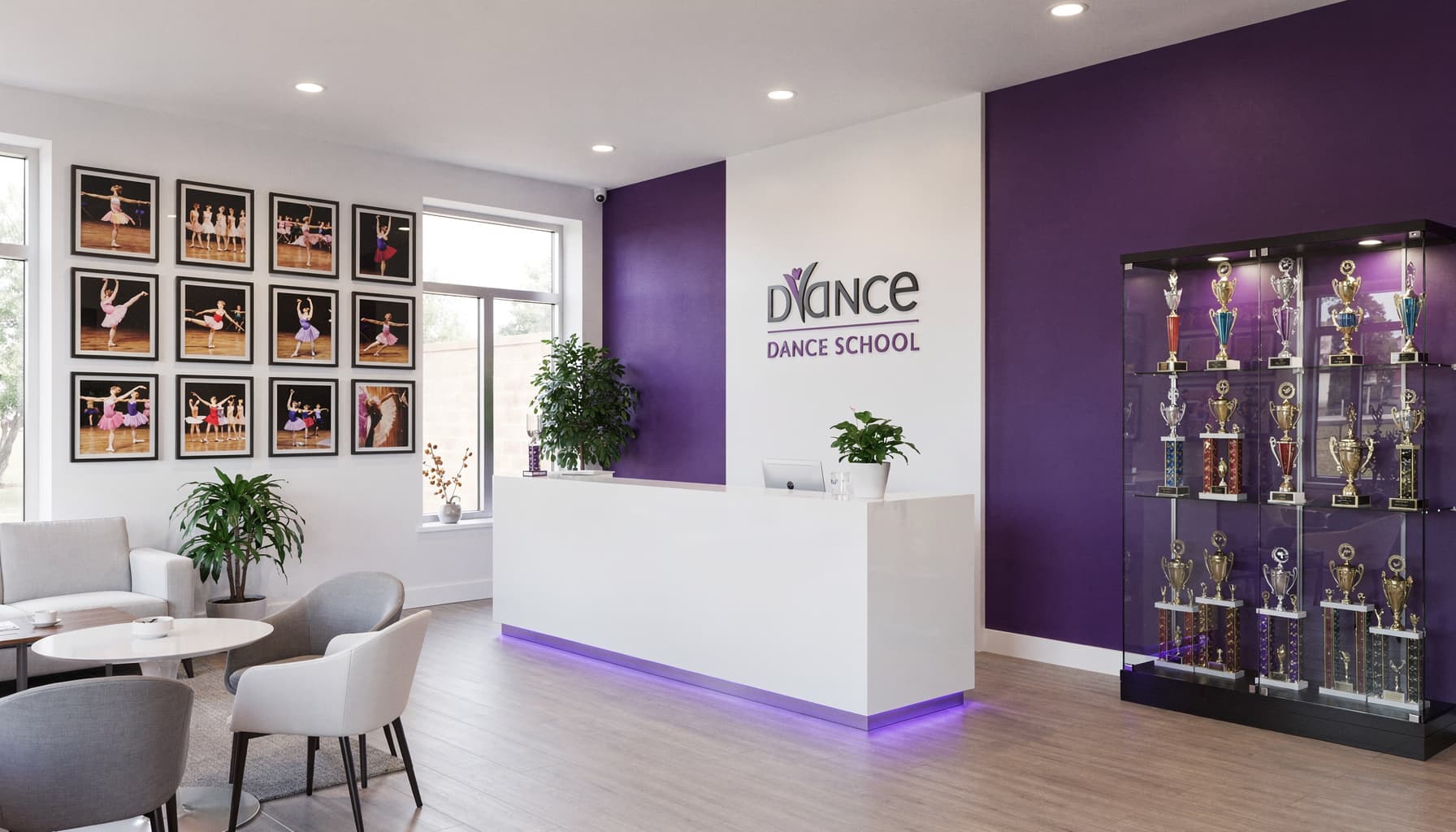
- A reception or waiting area for parents
- Storage for equipment, costumes, and props
- A location with good visibility or easy discoverability
- Lease terms that give you enough security to invest in the space
The cost conversation. In most of the UK, a good hired hall will cost between £8 and £20 per hour depending on location and quality. A dedicated studio will typically cost between £800 and £4,000 per month in rent depending on size and location. Do not commit to more space than your projected Year 1 revenue can support.
Legal structure and insurance
This section is not exciting but it matters.
Legal structure. Most small dance schools operate as sole traders. This is the simplest structure: you register with HMRC for self-assessment, you pay income tax on your profits, and your personal and business finances are legally one and the same. As you grow, many school owners move to a limited company structure for tax efficiency and liability protection. Speak to an accountant about which is right for you.
Insurance. You need at minimum:
- Public liability insurance (covers injury to students or members of the public on your premises)
- Professional indemnity insurance (covers claims arising from your teaching)
- Employer's liability insurance if you employ anyone, including part-time teachers
Dance UK and other professional bodies often offer insurance as part of their membership, which can be cost-effective. Never teach a class without appropriate insurance in place.
DBS checks. If you or any of your staff work with children, you need an enhanced DBS (Disclosure and Barring Service) check. This is not optional and cannot be obtained after the fact if something goes wrong. Get it sorted before you start.
Safeguarding training. A basic child safeguarding awareness course is strongly recommended and required by many insurance policies. Dance UK and similar organisations offer affordable online training.
Setting your prices
Pricing is one of the most psychologically challenging parts of starting a dance school. Most new owners underprice, for a combination of reasons: they are not confident yet, they worry about putting families off, and they do not want to be seen as expensive.
This is a mistake. Sustainable pricing is important for the health of your business, and your pricing communicates something about the quality of your offering. Families who are serious about their child's dance education are often suspicious of prices that seem too low.
Research the market. Look at what comparable schools in your area charge. You do not need to match the cheapest option. If you are offering a high quality experience, price it accordingly.
Calculate your costs first. Work out what a class costs you to deliver: venue hire, your time, any assistant teachers, insurance pro-rated across the year. Then determine the minimum number of students needed to make it viable at different price points.
Think in terms of monthly value, not hourly rate. Dance classes are often priced per term, per month, or per class. Monthly direct debit pricing tends to be the most financially stable for schools and the most manageable for parents. A class priced at "£32 a month" sounds much more accessible than "£8 per class for 4 classes a month", even though the numbers are identical.
Recruiting students for your first term
Opening your doors is the most exciting and most nerve-wracking part of starting a dance school. Many owners put a lot of effort into getting everything else ready, then spend very little time on actually getting students through the door.
Do not make this mistake. Marketing should start at least eight weeks before your first class, and it should be your primary focus during that period.
Tell everyone you know. Start with your personal network. Tell every friend, family member, former student, and acquaintance that you are opening. Ask them to tell people they know. This is not a substitute for a proper marketing strategy, but it is free and often underestimated.
Get on social media early. Start posting about your upcoming school on Instagram and Facebook before you open. Share your journey, your venue, your preparation. Build an audience of interested parents before you have a single student. Run a "founding families" promotion for the first 20 students to sign up, offering a small discount on their first term.
Local outreach. Visit the primary schools near your venue and ask if you can put a flyer in their book bags or newsletter. Contact local parenting groups and community Facebook pages. Attend local community events if any happen near your launch date.
Offer free taster classes. A free or heavily discounted taster session removes the risk for a family who is curious but not yet committed. A well-run taster class with a genuine experience of what your school is like will convert a significant proportion of attendees into regular students.
Build your website before you launch. Parents will Google you. They will look at your Instagram. If they cannot find you, or if what they find looks amateurish, they will not enquire. Your digital presence needs to be ready before you start telling people you exist.
Your first classes: what to expect
The first few months of running a dance school are rarely what new owners expect.
Class sizes will be smaller than you hope. A class of 6 students in your first term is not failure. It is normal. Give yourself 18 to 24 months to reach the enrolment levels you are working towards.
Some parents will not come back after the first class. This does not necessarily mean you did anything wrong. Sometimes the timing does not work, or the child decided they preferred gymnastics. Ask briefly what their experience was like and move on.
You will spend more time on admin than you expect. Enquiries, enrolments, payments, correspondence, scheduling, social media, costumes for the show you have already promised. Get systems in place early: a simple booking system, a direct debit payment setup, a way to communicate with parents en masse.
Some weeks will feel hard. Running your own business involves uncertainty, and the early period of a dance school involves a lot of it. You will have a great class and then come home to three emails from parents who cannot make next week, and wonder if you have made a terrible decision. This is normal. Almost every successful studio owner has been through it.
Building for the long term
The schools that grow into thriving, sustainable businesses are not the ones who had the most talent or the best ideas. They are the ones who showed up consistently, kept improving, and treated the business side of running a dance school with the same care and commitment they brought to teaching.
Specifically:
Invest in your professional development as a teacher and a business owner. Teaching a great class is necessary but not sufficient for running a great school. Reading about marketing, pricing, customer experience, and business strategy will pay dividends.
Build a waiting list culture. When your classes are consistently full, a waiting list is gold. It creates urgency for new enquiries, reduces churn (students are reluctant to give up their spot), and signals to the community that your school is the one to be at.
Create strong systems before you need them. It is much harder to implement a booking system, a communication process, or a show planning workflow when you are already overwhelmed. Build the infrastructure when you have capacity, not when you desperately need it.
Take your website and digital presence seriously. The dance schools that grow the fastest in a competitive market are almost always the ones with the strongest online presence. Your website is working for you around the clock. Make sure it is doing a good job.
Starting a dance school is one of the most rewarding things you can do with a career in dance. The combination of teaching the thing you love, building a community around it, and running a business that is entirely your own is genuinely special. It is not easy. But with the right preparation and the right mindset, it is absolutely achievable.
And when you have your first full class of children who are clearly loving it, and a waiting list of new families eager to join, you will be very glad you started.